



Full-Service Movers vs. DIY Moving: Which Is Right for Your Home?
Our Services
Give Us a Call
651-488-4808
Request a Quote
Fill in our Form
Send us an Email
info@goodstuffmoving.com
Got Questions?
By Jim Jones, Operations Manager, Good Stuff Moving Last updated: July 16, 2026
Quick Answer
Full service movers cost more but save you time, physical strain, and the risk of damaging your own belongings, often finishing a local Minneapolis move in a single day. DIY moving costs less upfront but shifts all the packing, driving, and liability onto you, and usually stretches the process across several days instead of one. The right call depends on your budget, timeline, and how much physical work you actually want to take on.
Key Takeaways
- Full service movers handle packing, loading, driving, and unloading, worth it for larger homes, longer distances, or a tight timeline.
- DIY moving looks cheaper on paper, but truck rental, fuel, supplies, and your own lost time often close the cost gap, especially on long-distance moves.
- A labor-only hybrid, you rent the truck, a crew loads and unloads it, splits the difference for anyone who wants to save money without the heaviest lifting or the driving.
- Home size and moving distance are the two biggest factors in which option actually saves you money.
- A full-service crew typically finishes a local move in hours; a DIY move usually takes multiple days once packing and prep work are factored in.
What Full Service Movers Actually Do?
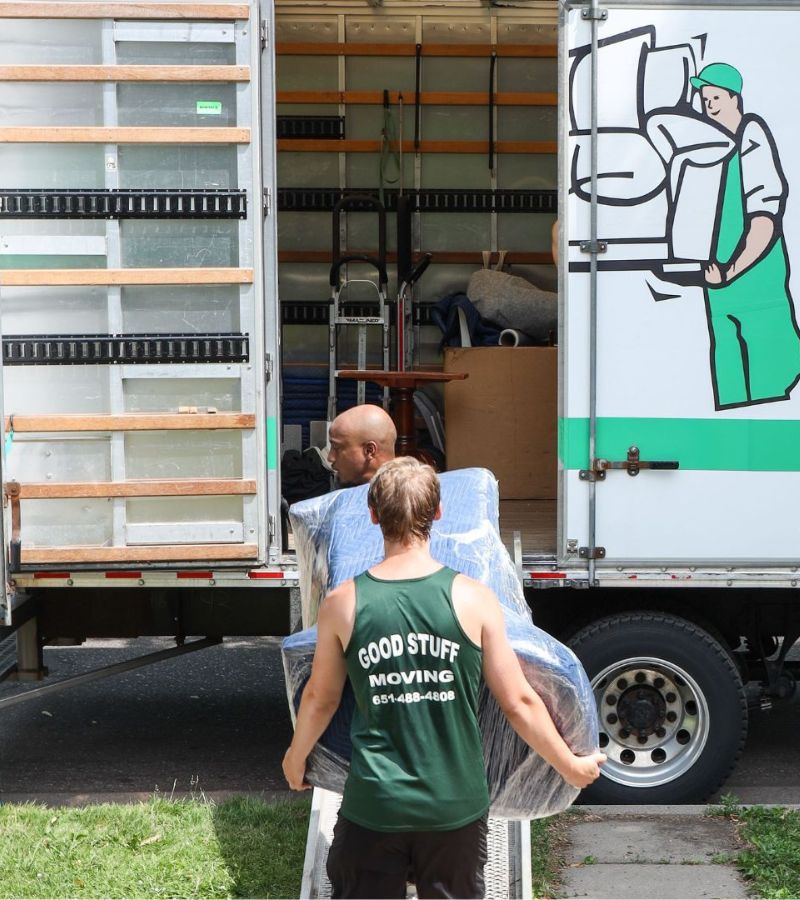
With full service movers, a professional crew handles packing, loading, transport, and unloading, with unpacking available too. At Good Stuff Moving, two of our own tiers qualify: Everything Moved (you pack, we move) and You Don’t Lift a Finger (we pack and move over two days).
What you get that a DIY move doesn’t include: professional equipment, trained labor, and liability coverage on your belongings. If packing is the part you want off your plate, our packing services can be added to almost any tier, not just the top one, so you’re not stuck choosing between doing everything yourself and paying for everything at once.
A typical full-service moving day starts with a quick walkthrough, so the crew can plan the loading order and flag anything fragile or oversized before a single box moves. From there, the crew wraps furniture, loads the truck in a sequence built to keep items from shifting in transit, drives to the new address, and unloads room by room based on the layout you give them. Unpacking is usually a separate add-on rather than a default part of the service, worth confirming up front if you want boxes emptied the same day.
What DIY Moving Actually Involves
A DIY move means renting a truck, packing every box yourself, loading it, driving it, and unloading at the other end. There’s no professional liability coverage on your belongings beyond whatever you separately buy, and you’ll need physically capable help and enough comfort behind the wheel of a large rental truck to drive it safely, especially through downtown Minneapolis or St. Paul traffic.
That timeline usually starts weeks before moving day, not the weekend of. You’re sourcing boxes and packing materials, disassembling furniture, and lining up help from people who can commit to a specific date rather than a general willingness to pitch in. On the day itself, you’re also responsible for equipment most households don’t already own, furniture dollies, moving blankets, and tie-down straps, plus a truck sized correctly for what you’re actually moving. Skipping any of that is how driveways get scratched, backs get strained, and a move that should take a day stretches into a weekend.
Full-Service Movers: Pros and Cons
Pros:
- The fastest option for getting everything from one address to another
- The lowest physical risk to you, no lifting, no driving a truck you’re not used to
- Professional handling and equipment that reduce the odds of damage to your belongings or your home
- Frees up your moving day for everything else on the list, utilities, address changes, final walkthroughs
Cons:
- The highest sticker price of the options covered here
- Less control over exact timing, since you’re working around the crew’s schedule rather than your own
- Trusting someone else with your belongings, which takes some people longer to get comfortable with than others
DIY Moving: Pros and Cons
Pros:
- The lowest sticker price for a small, local move
- Full control of your own schedule from packing through unloading
- No coordinating around anyone else’s availability but your own
Cons:
- A real risk of injury or item damage without professional equipment or experience
- Hidden costs, truck rental, fuel, insurance, supplies, lost work time, that add up fast and often close the gap with full-service pricing
- Most first-time DIY movers underestimate just how physically demanding and time-consuming it actually is

Full Service Moving Cost: Where the Math Lands
DIY is often cheaper for a studio or one-bedroom local move. The gap narrows, and can reverse, for two-plus-bedroom homes and long-distance moves once you count truck rental, fuel, supplies, and your own lost wages against the full service moving cost. Home size and distance are what actually decide which option wins on price, more than any general rule of thumb.
Part of what makes the comparison tricky is that full-service pricing is mostly fixed once you book it, you know the number going in. DIY costs are more variable and easier to underestimate: truck rental and mileage, fuel, boxes and packing materials, dollies or blankets you don’t already own, and the value of the time you and your helpers spend on it instead of anything else. That last piece, the opportunity cost of your own time, rarely makes it into a DIY budget until after the move is already done.
How Long Each Option Actually Takes
Full-service movers typically wrap up a local move in a single day. A studio or one-bedroom usually takes 3 to 6 hours with a full crew, and a two- to three-bedroom home runs closer to 6 to 10 hours. Long-distance moves add travel time on top of that, but the loading and unloading itself stays fast because a trained crew is doing it.
DIY moves stretch across days, not hours. A small local move usually takes 1 to 2 days once you count packing, loading, driving, and unloading; a medium-sized home often takes 2 to 3 days. Add in the prep work, most people need 4 or more weeks to pack a home properly, and DIY starts to look less like a weekend project and more like a part-time job leading up to moving day.
The Middle Ground: Labor Only Movers
Labor only movers are the option most binary “hire us or do it yourself” articles skip entirely. You rent the truck or pod, and a Good Stuff Moving crew handles the loading and unloading only. It’s moving labor, and it’s bookable today, not a hypothetical.
It’s a genuine middle ground for anyone who wants to save money but would rather skip the injury risk, the packing, and the truck-driving part of a DIY move. If you want to see how labor-only stacks up against our other tiers side by side, see all the ways to hire us for the full lineup, from the most hands-off option down to help with just the heavy lifting.
Mistakes That Turn a DIY Move Into a Bad One
DIY moves go wrong in predictable ways, and most of them are avoidable with a little planning.
- Booking the truck too late. Rental trucks get reserved fast around the first and last weekends of the month, and waiting until the week of your move often means settling for the wrong size or an inconvenient pickup location.
- Guessing on truck size. Too small, and you’re making a second trip or leaving furniture behind. Too big, and you’re paying for space you don’t use while burning extra fuel driving it around.
- Underestimating pack time. Even a small apartment can take 20 to 30 hours to pack properly once you account for wrapping fragile items, disassembling furniture, and labeling boxes, most people budget a fraction of that.
- Assuming personal auto insurance covers the rental truck. It usually doesn’t. Standard auto policies typically exclude large rental trucks, which means damage to the truck, other vehicles, or property becomes your responsibility without separate coverage.
- Skipping the pre-rental inspection. Not documenting existing damage or checking tires and fluids before you drive off can mean getting charged for problems you didn’t cause, or dealing with a breakdown mid-move.
How to Decide: Full Service Movers vs DIY
The full service movers vs DIY decision usually comes down to a handful of factors, not a gut feeling. Lean full-service if you have two or more bedrooms, a long-distance move, heavy or valuable items, a walk-up building, or a tight timeline. This is also where our apartment movers earn their keep, since stairs and elevator logistics in older St. Paul walk-ups or Minneapolis high-rises tend to tip the math toward hiring help.
Lean DIY if you have a studio or one-bedroom local move, a flexible schedule, reliable help, and you’re comfortable driving a rental truck.
Lean labor-only if you want to save money but would rather not load, unload, or drive the truck yourself.
Whichever way you lean, decide early. Full-service crews and rental trucks both get booked up fastest around the first and last weekends of the month, so making the call 4 to 6 weeks out gives you the most options either way.

Frequently Asked Questions
Is full-service moving worth the extra cost?
For larger homes, long-distance moves, or a tight timeline, yes, the time saved and the reduced physical risk usually justify the higher price. For a small local move on a flexible schedule, it’s a closer call. Local, one-day moves also tend to make the time-savings case easiest to see, since a full crew often finishes in less time than it would take you to pack a single room.
How much cheaper is DIY moving vs full service?
It depends heavily on home size and distance. DIY moving vs full service tends to favor DIY for studios and one-bedrooms moving locally, but the gap narrows fast once you add up truck rental, fuel, supplies, and your own time for anything bigger or longer.
What's the difference between full-service and labor-only moving?
Full-service includes packing, loading, driving, and unloading. Labor-only means you handle the truck and the driving yourself, and our crew provides just the moving labor for loading and unloading.
Can I get insurance coverage for a DIY move?
Not from a moving company in the way full-service movers provide it. You’d need to arrange separate coverage yourself, often through a rental truck company’s optional protection plans or your own renters or homeowners policy, and it’s worth checking the fine print before you assume you’re covered. It’s also worth confirming what the rental company requires before handing over the keys, since finding out you’re not covered at pickup can delay your entire moving day.
How do I know if my move is too big to handle myself?
If you’re moving two or more bedrooms, have heavy or specialty items, are relocating long-distance, or don’t have reliable help lined up, it’s usually a sign to at least consider full-service movers or a labor-only hybrid instead of going it alone.
Does Good Stuff Moving offer partial packing if I don't want the full-service option?
Yes. You don’t have to choose between full-service and doing everything yourself. Our movers and packers can handle just the rooms or items you’d rather not pack, while you take care of the rest.
What if I start a DIY move and realize halfway through that I need help?
Call us at 651-488-4808. Plans change mid-move more often than people expect, and a labor-only or partial-service booking can usually be arranged on short notice to finish the job without you having to do it all solo.
The Bottom Line
Neither option is universally right. Full service movers make sense when your time, your back, or your timeline can’t absorb a DIY move, and DIY makes sense when your home is small, your schedule is flexible, and you’d rather keep the savings. If you land somewhere in between, that’s exactly what labor-only moving is for. Whatever you choose, decide early enough to actually have options. Ready to figure out which fits your move? Talk to our home movers and we’ll help you land on the right tier.